23 Years of Neurological Care: Why We Recommend Glutathione for Parkinson’s Management
Nov 16, 2026
Living with Parkinson’s disease often means adapting as both your symptoms and your needs change. Medication, exercise, rehabilitation, and other treatments can all play important roles in managing the condition. But researchers are also investigating another piece of the Parkinson’s puzzle: oxidative stress.
That’s where glutathione comes in.
At Advanced Medical Care in Queens and Brooklyn, New York, our neurological care extends beyond conventional treatment alone. We also offer individualized glutathione therapy as a supportive option for people with Parkinson’s disease when we determine it’s appropriate.
Parkinson’s develops as dopamine-producing neurons in an area of the brain called the substantia nigra become damaged and die. The resulting dopamine drop contributes to familiar symptoms, including tremors, stiffness, slowed movement, and balance problems.
Researchers have also found that glutathione levels are depleted in the substantia nigra in Parkinson’s disease.
Why does that matter? Glutathione is one of your body’s chief antioxidants. It helps neutralize reactive oxygen species — unstable molecules that can damage cells when they accumulate faster than the body can control them.
That imbalance is known as oxidative stress. A 2024 review in Phytotherapy Research describes oxidative stress as playing a central role in Parkinson’s disease and examines the importance of glutathione in protecting neurons from oxidative damage.
The combination of oxidative stress and glutathione depletion in Parkinson’s raises an intriguing question: Could strengthening the brain’s antioxidant defenses have therapeutic potential?
Researchers continue to investigate that possibility.
A 2026 systematic review examined controlled studies involving glutathione and N-acetylcysteine (NAC), a compound that supplies cysteine, which the body can use to produce glutathione. The review found encouraging results for NAC, including increases in glutathione-related measures and improvements in some motor and non-motor outcomes.
Results for glutathione itself were less clear. The researchers concluded that evidence remains preliminary and that larger, longer studies are needed to determine whether glutathione or glutathione-supporting therapies can provide meaningful clinical benefits for people with Parkinson’s.
There’s a compelling biological reason to continue studying glutathione, but research hasn’t established it as a treatment that slows or stops Parkinson’s disease.
At Advanced Medical Care, we don’t view glutathione as a replacement for established Parkinson’s treatment.
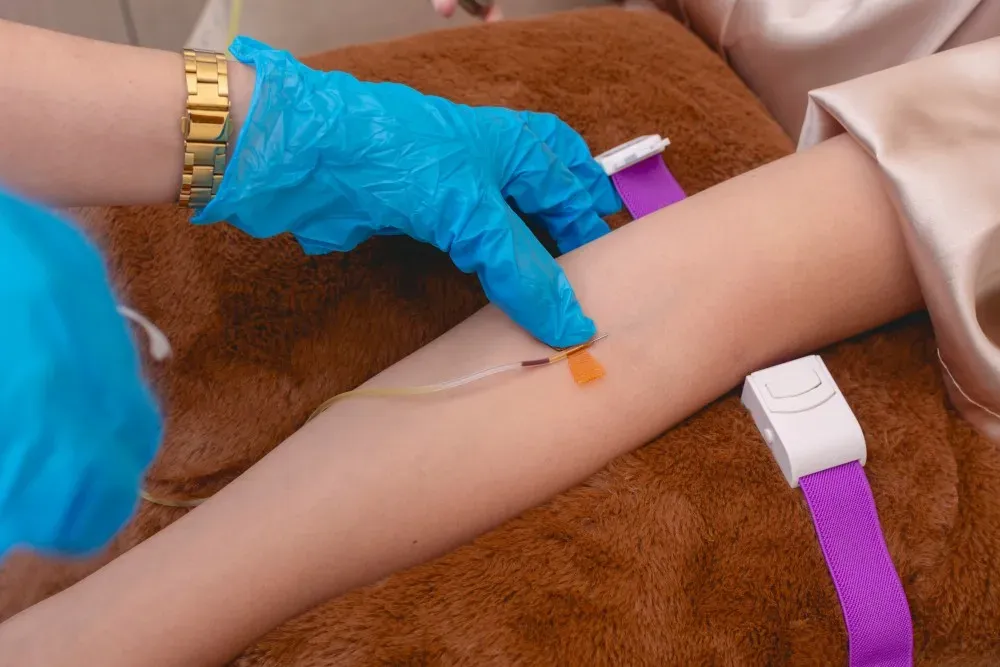
Instead, our team considers it as part of a broader, individualized approach to neurological and wellness care. For example, our wellness and longevity program utilizes glutathione IV therapy for several health concerns, including Parkinson’s disease. IV therapy delivers glutathione directly into your bloodstream, not through your digestive system.
When considering this therapy, we look at your health, symptoms, current treatments, and individual needs rather than assuming everyone with Parkinson’s benefits from the same approach, because Parkinson’s doesn’t affect everyone in the same way.
After more than two decades of providing neurological care, we’ve seen how much Parkinson’s can vary from one person to another.
Some people first notice a tremor. Others struggle more with stiffness, slowed movement, balance, sleep, mood, fatigue, or cognitive changes. Symptoms can also evolve.
That’s why Parkinson’s management isn’t about relying on one therapy. It’s about continually looking at how you’re doing and determining which combination of conventional treatment and supportive care makes sense for you.
Glutathione therapy is one option we consider within that larger picture.
Research into glutathione and Parkinson’s continues to evolve. What we know today is that glutathione plays an important role in the body’s antioxidant defenses, glutathione depletion is associated with Parkinson’s disease, and scientists continue their research into whether supporting antioxidant defenses can translate into meaningful clinical benefits.
At Advanced Medical Care in Queens and Brooklyn, New York, we combine decades of neurological experience with individualized wellness services to support your health from multiple angles.
If you’re living with Parkinson’s and want to know whether glutathione therapy could have a place in your management plan, contact our team to schedule an evaluation.
