Can Lack of Sleep Cause Heart Palpitations? Why Your Heart Races at Night
Nov 02, 2026
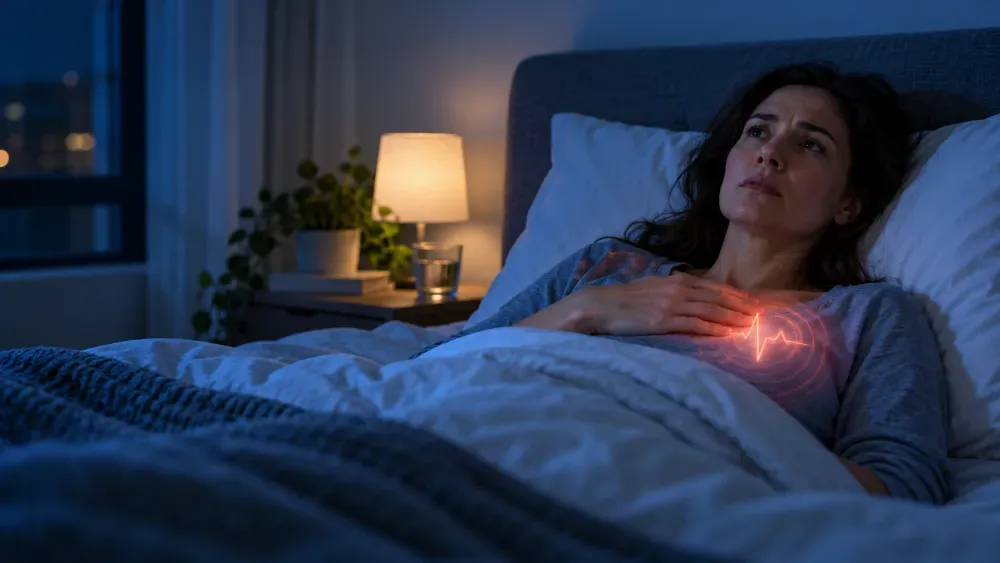
You're lying in bed trying to fall asleep when suddenly you become very aware of your heartbeat. It may feel like your heart is pounding, fluttering, skipping a beat or racing even though you're resting.
Yes, lack of sleep can contribute to heart palpitations in some people. However, poor sleep isn't the only possible explanation for a racing, pounding or fluttering heartbeat, and recurring symptoms shouldn't automatically be blamed on sleep deprivation. Understanding why palpitations happen at night, what might be triggering them and when to seek medical care can help you determine your next steps.
Not getting enough sleep can contribute to heart palpitations in some people. When you're sleep-deprived, your body may remain in a more stressed and alert state instead of fully recovering. This can affect the nervous system that helps regulate automatic functions such as heart rate and may make your heartbeat feel faster, stronger or more noticeable.
Lack of sleep also often happens alongside other common palpitation triggers, including:
The American Heart Association identifies insufficient sleep, stress, excessive caffeine, tobacco, alcohol and certain medications as possible triggers for premature heartbeats.
Sometimes, palpitations occur because the heart produces an early or extra beat, known as a premature contraction. This may be followed by a brief pause, making the next heartbeat feel stronger and creating the sensation that your heart has skipped a beat. Lack of sleep is one of several factors that may contribute to these premature beats.
You may occasionally notice palpitations after a poor night's sleep without having heart disease. However, the timing alone cannot tell you exactly what's causing them.
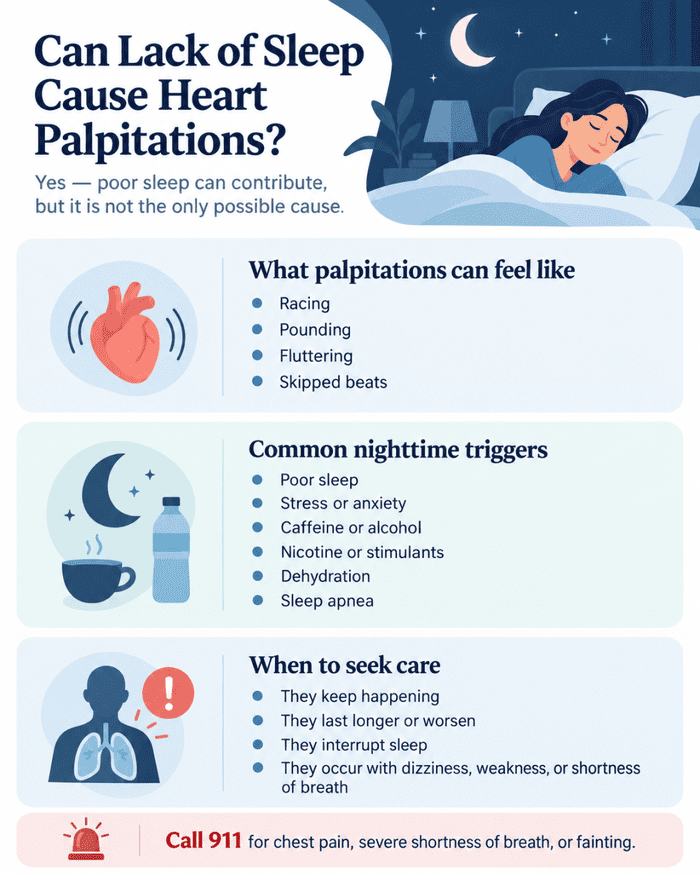
Heart palpitations are the feeling of becoming unusually aware of your heartbeat.
You may feel like your heart is:
Some people also feel the heartbeat in their throat or neck.
Palpitations don't necessarily mean your heart rate is dangerously high. You can feel a very forceful heartbeat, a skipped beat or an extra beat even when your overall heart rate isn't fast.
Heart palpitations can happen at any time, but many people notice them the most when they're trying to fall asleep or resting in bed. Sometimes that's because the heart is reacting to a trigger. Other times, you're simply much more aware of sensations that would be easy to miss during a busy day.
During the day, you're usually moving around, talking, working and paying attention to other things. At bedtime, those distractions disappear.
When you're lying still in a quiet room, a heartbeat that you wouldn't notice during the day may suddenly feel very obvious. Cleveland Clinic notes that people are often more aware of palpitations at night because they're resting and aren't distracted.
Certain positions may also make the sensation of your heartbeat more noticeable. And while changing positions may make you more comfortable, there isn't one sleeping position that's proven to prevent heart palpitations for everyone.
It's common for stress to become more noticeable once the day slows down.
If you're lying in bed worrying, replaying the day or thinking about everything you need to do tomorrow, your body's stress response may stay active. That can make your heart beat faster or harder and make you more aware of it. Anxiety and panic can also cause palpitations.
New or recurring palpitations shouldn't be written off as anxiety. Heart rhythm problems and other medical conditions can produce similar sensations and require an evaluation.
Things you consume earlier in the day can still affect you when it's time to sleep. Possible triggers include:
Caffeine and nicotine can stimulate the nervous system, while alcohol can affect both sleep and heart rhythm. Certain decongestants and other medications may also contribute to palpitations in some people.
If palpitations tend to happen after a particular drink, medication or evening routine, that pattern is worth paying attention to.
Not every nighttime palpitation begins with stress or poor sleep. Other possible contributors can include:
These conditions can affect the way your heart beats or how strongly you notice it. Some may require medical testing to identify.
Sometimes nighttime palpitations are related to an underlying sleep or heart condition. Sleep apnea repeatedly interrupts breathing during sleep and can cause changes in heart rate and blood pressure. If your nighttime symptoms occur alongside any of the following, it can be worth investigating further:
For a deeper look at that connection, see our resource covering How Does Sleep Apnea Affect the Heart?
Palpitations can also occur with abnormal heart rhythms such as atrial fibrillation, or AFib. However, feeling your heart flutter or skip doesn't automatically mean you have an arrhythmia. The American Heart Association notes that some people report palpitations even when heart monitoring shows a normal rhythm.
If your main concern is a high number recorded by your smartwatch rather than a sensation you can feel, see our resource covering High Heart Rate While Sleeping: Causes, Sudden Spikes and When to Worry.
If you notice occasional palpitations while lying in bed and have no other concerning symptoms, try sitting upright or changing positions, breathing slowly and allowing yourself a moment to relax. Pay attention to how long the sensations last and whether they improve. If symptoms persist, worsen or keep returning, seek medical advice rather than assuming they are caused by lack of sleep.
To help reduce the likelihood of recurring nighttime palpitations, consider these habits:
If palpitations continue despite these changes, a medical evaluation may help identify other possible causes.
Heart palpitations are common and many aren't caused by a dangerous heart condition. However, recurring or worsening symptoms shouldn’t be ignored.
You should speak with a healthcare provider if your palpitations:
How often the episodes happen, how long they last and whether other symptoms occur can all help your healthcare provider understand what may be causing them.
Call 911 or seek emergency medical care if heart palpitations occur with:
Palpitations accompanied by chest discomfort, severe breathing difficulty or fainting require emergency attention rather than waiting for a routine cardiology appointment.
If you keep experiencing unexplained racing, pounding, fluttering or irregular heartbeats at night, especially when they're becoming more frequent or affecting your sleep, it’s worth speaking with a medical professional.
Evaluation can be especially important if you have:
To understand what may be causing the palpitations, a healthcare provider may ask about:
Depending on your symptoms and medical history, evaluation may also include:
At Advanced Medical Care, our cardiology team helps patients throughout Queens and Brooklyn understand what could be behind recurring heart palpitations. Because nighttime symptoms can sometimes overlap with sleep disorders, our sleep medicine team can also help when snoring, gasping or disrupted sleep are part of the picture.
Advanced Medical Care provides care in Forest Hills, Queens and Brighton Beach, Brooklyn. If you're experiencing recurring non-emergency palpitations and aren't sure what's causing them, we can help evaluate your symptoms and determine whether further testing may make sense. Please call us at 347-571-9389 (Queens) or 929-552-2973 (Brooklyn) to schedule an appointment, or request an appointment online to get started.
If palpitations occur with chest pain, severe shortness of breath, fainting or other emergency symptoms, call 911 rather than waiting for an outpatient appointment.
Yes, even one poor night's sleep may contribute to palpitations in some people, particularly when combined with stress, anxiety or increased caffeine intake.
You may simply notice your heartbeat more easily when you're lying still in a quiet room without daytime distractions. Stress, caffeine, alcohol, certain medications and abnormal heart rhythms can also cause a pounding or racing sensation at night.
Yes. Stress and anxiety can activate the body's stress response, making your heart beat faster or feel more forceful, particularly when you're trying to relax or fall asleep.
There isn't one sleeping position that's proven to prevent heart palpitations for everyone. Certain positions may make you more aware of your heartbeat, so changing positions may help you feel more comfortable when symptoms are mild.
Yes, a pounding, racing or irregular heartbeat can sometimes be noticeable enough to wake you. If this happens repeatedly, particularly without an obvious trigger or alongside other symptoms, it may be worth discussing with a healthcare provider.
