Low Heart Rate While Sleeping: How Low Is Too Low?
Nov 23, 2026
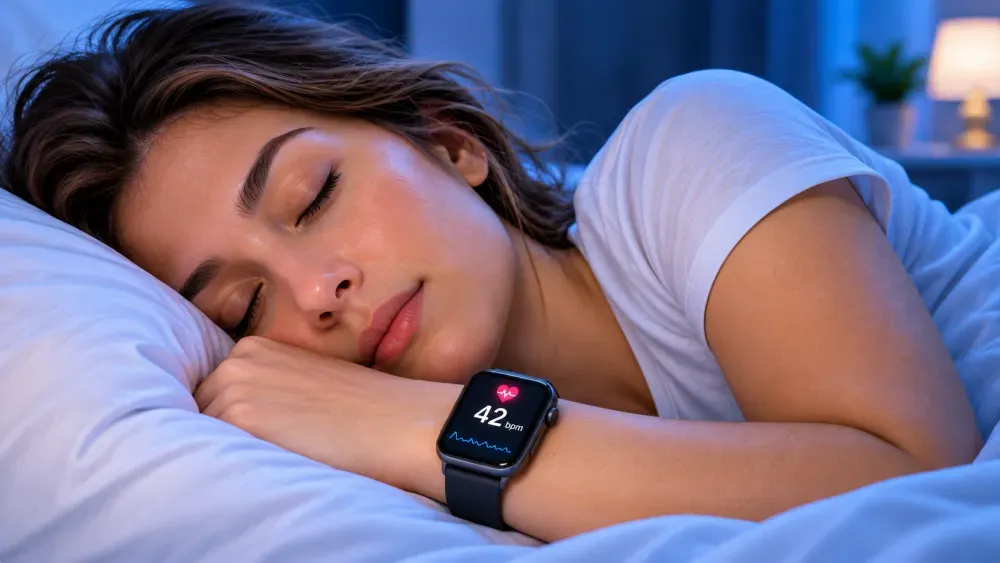
Have you checked your smartwatch or sleep tracker in the morning and noticed that your heart rate dropped into the 40s overnight or maybe even the 30s? Seeing a number that low can be unsettling, especially if you don't know whether it happened because you were sleeping or because something may be wrong.
A heart rate below 60 beats per minute (BPM) is often referred to as bradycardia, but during sleep, that doesn't automatically mean something is wrong. Very low readings can sometimes be related to medications, sleep apnea, thyroid problems or an abnormal heart rhythm.
Whether a low sleeping heart rate needs attention depends on the rhythm, your usual baseline, your health history and whether you're experiencing any symptoms. While this article focuses on low readings, a consistently high sleeping heart rate or repeated nighttime spikes can also be worth investigating.
While you're awake, your heart has to respond to movement, activity and everything else your body is doing. During restful sleep, those demands decrease and the part of your nervous system responsible for rest becomes more active. With less of those demands, the heart beats more slowly naturally.
However, during sleep, a heart rate below 60 doesn't automatically mean something is wrong. It's also common for physically active adults and athletes to have lower heart rates because their hearts can pump blood efficiently with fewer beats. This doesn't mean every low nighttime reading should automatically be considered normal. The more useful question is how low the heart rate is and whether there are other reasons to be concerned.
For a broader explanation of typical nighttime heart rates, see our guide What Is a Normal Sleeping Heart Rate?
There isn't one specific nighttime heart rate that automatically means something is wrong. Doctors also consider your usual heart rate, medical history, medications, symptoms and whether the reading represents a change from your normal pattern.
A sleeping heart rate in the 40s may be normal for one person but unusual for another. Readings in the 30s deserve additional consideration, particularly when they're new or unexplained.
For some people, a sleeping heart rate in the 40s can be normal, especially if they're physically active or their heart rate naturally runs low.
A reading in the 40s may be less concerning when:
It may deserve more attention when:
A heart rate in the 30s can sometimes occur during sleep, particularly in highly trained athletes. However, a heart rate this low shouldn't automatically be considered normal.
If readings in the 30s are new, unexplained or recurring, contact a healthcare professional promptly for guidance, even if you aren't experiencing obvious symptoms. Evaluation is especially important if you have known heart disease, receive abnormal heart-rhythm notifications or experience symptoms such as dizziness, fainting, unusual weakness or shortness of breath.
If the low readings are coming from a smartwatch, keep in mind that wearable measurements may need to be confirmed with medical-grade heart monitoring.
A low heart rate during sleep can be completely normal, especially in people who are physically active. But beyond fitness level, there are several other reasons your heart rate may run low at night, including medications and certain health conditions.
Certain medications are designed to slow the heart or can have that effect as part of how they work.
Examples include some:
If your heart rate becomes noticeably lower after starting a medication or changing your dose, mention it to the healthcare professional who prescribed it. Don't stop or change a prescribed medication on your own because of a low smartwatch reading.
An underactive thyroid, known as hypothyroidism, can slow many processes in the body and may contribute to a lower heart rate.
Changes in electrolytes such as potassium or calcium can also affect the electrical signals that control your heartbeat. Blood testing may help identify these or other contributing factors when appropriate.
Your heart has its own electrical system that tells it when to beat. Sometimes the heart's natural pacemaker, called the sinus node, doesn't send signals as regularly as it should. In other cases, the electrical signal starts normally but doesn't travel through the heart properly, which can cause a type of conduction problem known as heart block.
These problems can become more common with age or occur alongside certain types of heart disease.
Sleep apnea can also be associated with periods of a slower heart rate during sleep.
When breathing repeatedly stops or becomes restricted, oxygen levels can fall and the heart's rhythm may change. Signs that sleep apnea could be part of the picture include:
If unusually low nighttime heart-rate readings occur alongside these symptoms, a sleep evaluation may be worth discussing with a healthcare provider.
For more about this connection, read How Does Sleep Apnea Affect the Heart?
Smartwatches and fitness trackers can be useful for spotting patterns you otherwise wouldn't know were happening while you're asleep. However, they're not the same as medical heart monitoring.
Most consumer wearables estimate heart rate using optical sensors. Readings can sometimes be affected by:
Apple, for example, notes that even under ideal conditions its watch may not obtain a reliable reading every time and that occasional measurements can appear unusually high or low.
If your wearable repeatedly records a very low nighttime heart rate, save the data or screenshots to show your healthcare provider. An ECG or longer-term heart monitor can provide more detailed information about the heart's electrical activity if medical confirmation is needed.
Some people with a slow heart rate have no symptoms at all. However, problems can occur when the heart is beating too slowly to move enough blood to the brain and other parts of the body.
Symptoms can include:
These symptoms don't necessarily mean a slow heart rate is the cause, but they shouldn't be ignored. New or recurring symptoms warrant medical evaluation, while severe symptoms such as chest pain, fainting or serious difficulty breathing require emergency care.
You also may not notice a slow heart rate while you're actually asleep. That makes it useful to consider nighttime readings alongside symptoms you're experiencing during the day.
Call 911 or seek emergency medical care if a very slow heart rate occurs with severe or concerning symptoms such as:
Don't wait for another smartwatch reading or a routine cardiology appointment if serious symptoms are occurring.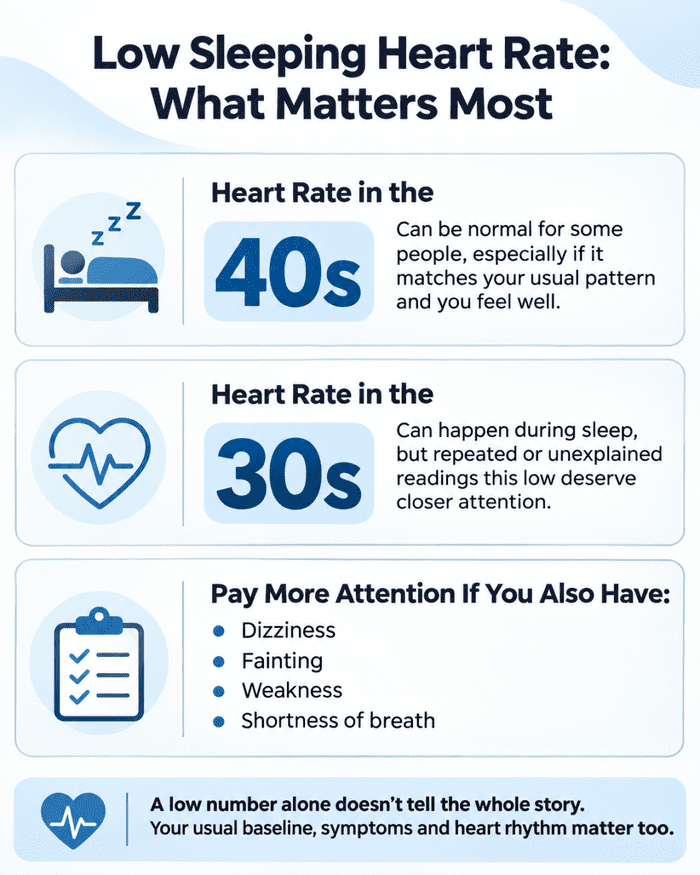
If your sleeping heart rate is unusually low, an evaluation can help you understand why it's happening and whether it's affecting your health. A healthcare provider can review:
Depending on what they find, testing may include:
Not everyone with a low sleeping heart rate needs treatment. If the slower rate is normal for you and isn't causing symptoms, nothing may need to be done. When an underlying cause is found, treatment may involve:
A low nighttime heart-rate number by itself is not an indication that you need a pacemaker. Whether one is needed depends on the type of rhythm problem, your symptoms and other findings from the evaluation.
It could be worth having a low sleeping heart rate evaluated when:
At Advanced Medical Care, our cardiology team helps patients throughout Queens and Brooklyn evaluate unusually low heart rates and other heart-rhythm concerns. If snoring, gasping or disrupted sleep are also part of the picture, our sleep medicine team can help determine whether a sleep disorder may be contributing.
Advanced Medical Care provides cardiology and sleep medicine services in Forest Hills, Queens and Brighton Beach, Brooklyn. If you've noticed recurring low nighttime readings and aren't sure what they mean, we can help evaluate the pattern and determine whether further testing makes sense.Please call us at 347-571-9389 (Queens) or 929-552-2973 (Brooklyn) to schedule an appointment, or request an appointment online to get started.
A sleeping heart rate around 40 BPM can be normal for some people, particularly healthy and physically active adults whose heart rates naturally run lower. If readings around 40 are new for you, repeatedly occur or are accompanied by dizziness, fainting, weakness or other symptoms, it's worth discussing them with a healthcare provider.
Not automatically. Heart rates below 40 can sometimes occur during sleep, particularly in highly trained athletes. However, repeated or unexplained readings in the 30s deserve closer attention, especially if they are a major change from your baseline or occur alongside symptoms.
Heart rate naturally slows while you sleep, and physical fitness can make it even lower. Other possible contributors include medications, sleep apnea, thyroid problems, electrolyte changes and problems with the heart's electrical system.
It can. Sleep apnea can be associated with episodes of nighttime bradycardia or other rhythm changes during breathing interruptions. Guidelines recommend considering sleep apnea evaluation when sleep-related bradycardia is detected.
One wearable reading can't tell you whether you have a heart problem, and wearable sensors can occasionally produce unusually low readings. If your watch repeatedly records rates below 40, particularly if this is new for you or you have symptoms, save the readings and discuss them with a healthcare provider.
No. The decision to use a pacemaker depends on the type of heart-rhythm problem, symptoms and other clinical findings, not simply reaching a particular nighttime heart rate. Sleep-related bradycardia by itself isn't considered an indication for permanent pacing.
